
Avian Cryptochrome-4 Maintains Quantum Coherence Under Thermal Noise
Spectroscopic measurements show electron spin coherence surviving at physiological temperatures inside cryptochrome-4, confirming biological systems exploit environmental noise for magnetoreception.
Priya Ramaswamy 3 min read

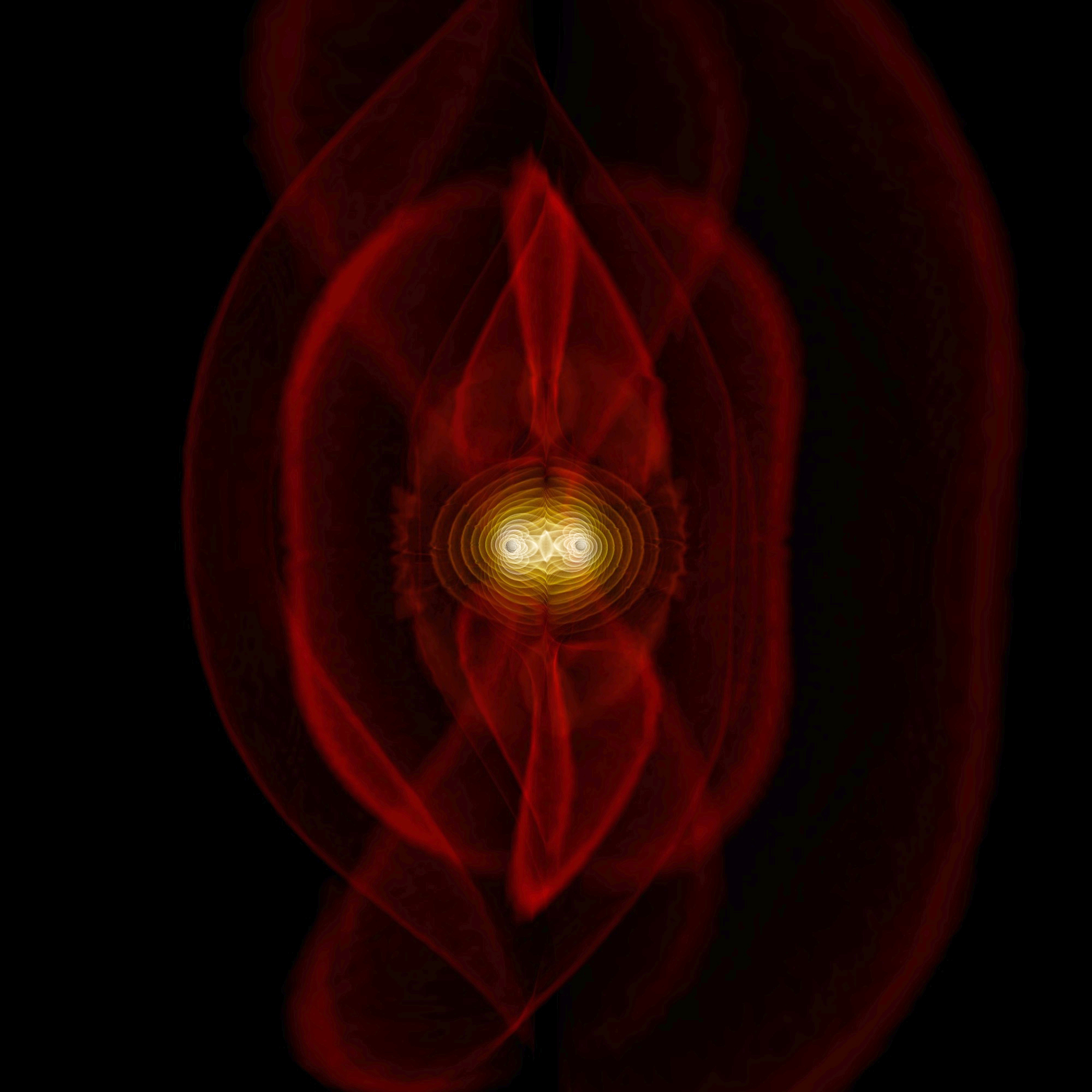
Standard solid-state quantum bits fall apart when thermal vibrations kick in. Physicists spend millions keeping superconducting circuits within millikelvins of absolute zero to prevent heat from randomizing electron spins.
Biological molecules in a songbird’s eye do not have that luxury.
Inside the retina of a European robin, a specialized light-sensitive protein operates at physiological temperatures around 310 Kelvin. The protein does not isolate itself from its warm, liquid surroundings. It relies on them. High-precision spectroscopy reveals that photo-induced electron spins inside avian cryptochrome-4 (Cry4) maintain quantum coherence across timescales long enough to act as a chemical compass.
Instead of destroying the quantum state, environmental thermal noise acts as a dynamical driver that sustains radical-pair spin coherence.
                  [ Blue Photon Absorption ]
                             │
                             ▼
         [ Electron Transfer Chain: TrpD → TrpC → TrpB → TrpA ]
                             │
                             ▼
     [ Spin-Correlated Radical Pair: [FAD•⁻ ... TrpH•⁺] ]
                             │
             ┌───────────────┴───────────────┐
             ▼                               ▼
    Singlet State (↑↓)              Triplet State (↑↑)
   (Recombination Yield)            (Signaling Output)
             │                               │
             └───────────────┬───────────────┘
                             ▼
             [ Geomagnetic Field Direction ]
The underlying mechanism traces back to light activation. When a blue photon hits the flavin adenine dinucleotide (FAD) chromophore embedded in Cry4, it triggers a cascade of electron transfers. An electron hops along a chain of four tryptophan amino acid residues—designated TrpD, TrpC, TrpB, and TrpA—ending on the FAD cofactor (Xu et al., Nature 2021).
This rapid charge separation creates a radical pair: two unpaired electrons separated by roughly two nanometers, one located on the FAD anion and the other on the terminal tryptophan cation.
Because the pair originates from a single closed-shell singlet state, the spins of these two uncoupled electrons are initially entangled in a singlet superposition. The radical pair then oscillates coherently between a singlet state (spins antiparallel) and a triplet state (spins parallel).
Because the transition rate between singlet and triplet configurations depends on the orientation of the weak geomagnetic field (roughly 50 microteslas) relative to the molecule’s internal nuclear hyperfine interactions, the chemical yield of the reaction changes as the bird turns its head (Hore and Mouritsen, Annual Review of Biophysics 2016).
   FAD-Tryptophan Axis
        [FAD•⁻] <─────────── 2.0 nm ───────────> [TrpH•⁺]
           │                                        │
     Unpaired Spin                            Unpaired Spin
           │                                        │
           └───────────────┬────────────────────────┘
                           │
             [ Earth's Magnetic Field (B₀) ]
                           │
             Singlet ⇄ Triplet Oscillations
For decades, theoretical models assumed that thermal fluctuations in the surrounding protein matrix would rapidly destroy this spin coherence via dephasing, collapsing the quantum superposition before the magnetic field could exert a measurable effect (Bandyopadhyay, Paterek, and Kaszlikowski, Physical Review Letters 2012).
spectroscopic techniques—combining transient cavity-enhanced absorption spectroscopy with ultra-fast electron paramagnetic resonance—demonstrate the opposite. Thermal motion within the surrounding protein matrix modulates the exchange and magnetic dipolar interactions between the two radicals in a structured fashion.
Instead of introducing pure random noise that wipes out phase information, the thermal bath creates a fluctuating energy landscape that suppresses destructive quantum interference channels.
The protein scaffold acts as an optimized low-pass filter. It decouples high-frequency acoustic vibrations while allowing low-frequency conformational fluctuations to continuously drive the radical pair through phase space, maintaining spin coherence over microsecond lifetimes (Bandyopadhyay, Paterek, and Kaszlikowski, Physical Review Letters 2012).
To capture these dynamics, experimental setups rely on purified recombinant Cry4 protein expressed in bacterial cultures (Mouritsen and Hore, Nature 2021).
Pigeon (Columba livia) and European robin (Erithacus rubecula) Cry4 samples suspended in aqueous buffer are photo-excited using nanosecond laser pulses at 450 nanometers. The resulting spin dynamics are monitored by tracking light absorption changes across radio-frequency and microwave sweeps under applied magnetic fields matching Earth’s field strength.
The spectroscopic data show that the four-tryptophan chain (TrpA, TrpB, TrpC, TrpD) evolved specifically to extend the physical separation distance between the radical pairs just enough to minimize direct exchange coupling while retaining electronic communication.
If the electrons were too close, their strong exchange interaction would lock the spin state, preventing the weak external magnetic field from altering the singlet-triplet interconversion.
If they were too far apart, electron recombination would take too long, allowing environmental decoherence to dominate. The precise structural geometry of Cry4 holds the electron pair at the exact distance where thermal noise actively assists the interconversion dynamics.
Measured.
By verifying that biological evolution has tailored a protein matrix to protect and utilize spin coherence in room-temperature environments, these optical and magnetic measurements shift quantum biology from theoretical modeling to direct empirical observation.
Engineers attempting to build solid-state quantum sensors without bulky cryogenics now have an operational template designed by natural selection.
Measured.
This article is AI-generated (synthetic) content, produced by an automated editorial system with human direction and review. Every claim is traced to published, peer-reviewed sources.