Your Cells Can Hand Over Their Power Plants (Mitochondrial Transfer)
Mitochondria — the engines inside every cell — were supposed to be private property, sealed in and inherited only when a cell divides. They're not.
The Unintuitive Universe · August 4, 2026
And it’s been measured. Every claim traced to the published research. Method & sources ↗
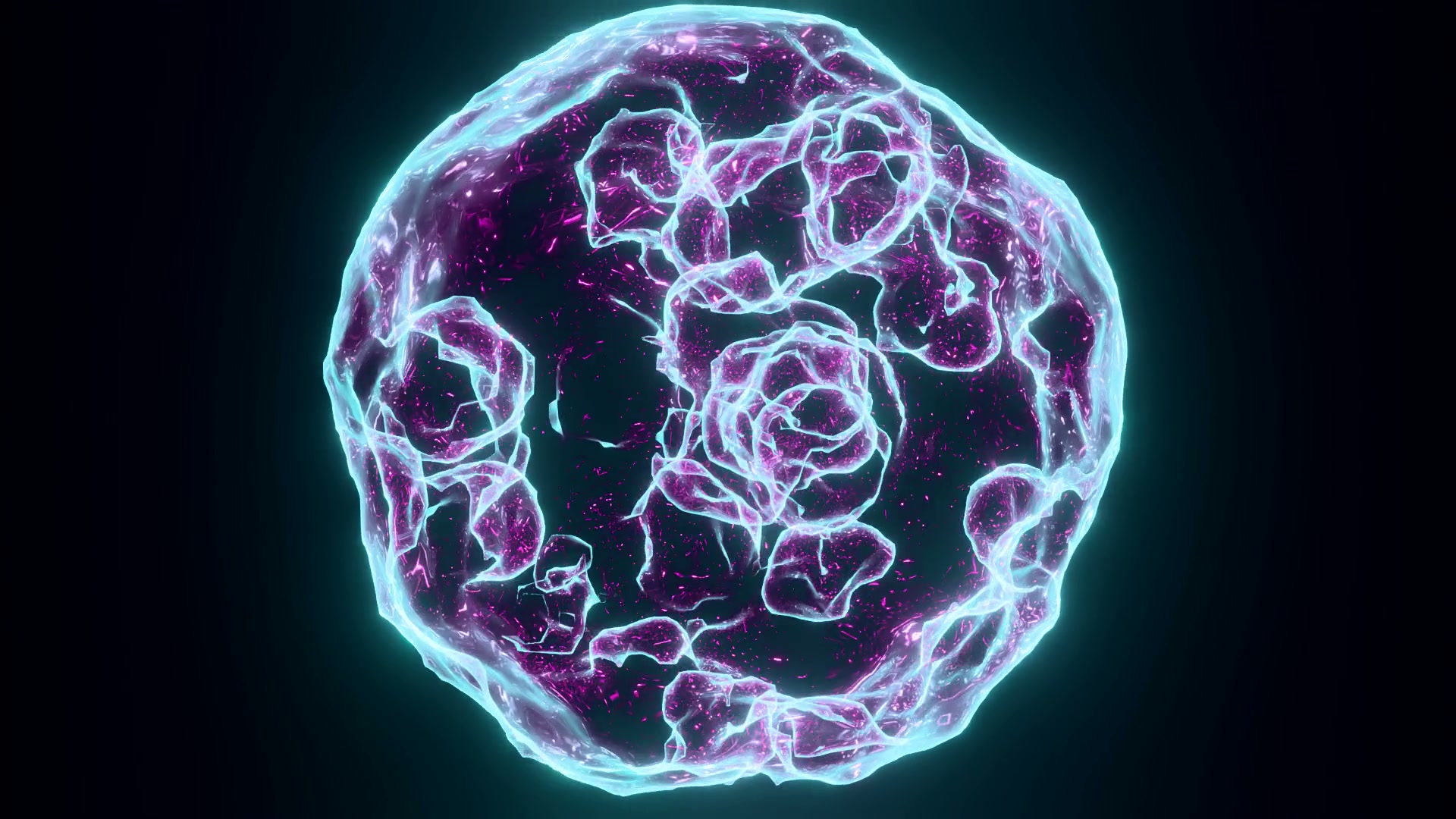
Every cell runs on mitochondria — the tiny engines that turn food and oxygen into usable energy. You were taught they stay put, sealed inside the cell that owns them, passed down only when that cell divides. That turns out to be incomplete. Cells can pull a mitochondrion out of one cell and move it into another. A living cell can donate its power plants — and a desperate one can steal them.
The handoff travels along routes we only recently learned to see. In two thousand four, biologists spotted impossibly thin tubes stretching between cells — tunneling nanotubes, delicate bridges a fraction of the width of a hair. Cargo moves across them. Two years later, another team showed the payload that matters: whole mitochondria crossing from one cell to another and restarting energy production in a cell whose own engines had failed. Cells also ship mitochondria inside little membrane bubbles, or release them into the space around them to be picked up. What they do not do is squeeze them through the tiny pores between cells — those act more like a handshake that says "dock here" than a pipe.
Then came the rescues. In a two thousand twelve experiment, mice were given a severe lung injury. Stem cells arrived at the damaged tissue and passed their mitochondria into the failing lung cells — and the animals that received the transfer survived at far higher rates. The donated engines were doing real work. A few years later, in a mouse stroke, support cells in the brain were seen releasing mitochondria that drifted into injured neurons, where they appeared to help the neurons recover. Damaged cells, handed a fresh set of batteries by their neighbors.
But the same trick has a dark side, because a cell that can receive can also be robbed. Cancer is the thief. In one leukemia, tumor cells throw out nanotubes and drain mitochondria out of the surrounding bone-marrow cells to fuel their own growth. Worse, some tumors reach into the very immune cells sent to kill them — pulling the mitochondria out of a T-cell, leaving that immune cell drained and weak while the cancer runs on the stolen power. The soldier arrives to fight, and the enemy siphons its fuel tank dry.
How much of this is happening inside you right now is still being pieced together. The clearest cases come from the lab and from animals under stress — injury, stroke, cancer. There are early signs it also runs quietly in healthy tissue, in fat and bone, at least in mice. Whether your cells routinely trade mitochondria as ordinary daily housekeeping is a question researchers are still working out. What has already changed is the picture of the cell itself. The mitochondrion was supposed to be the ultimate private property — the engine you inherit and keep. Instead it can be lent, delivered, and stolen. Your cells are not sealed boxes. They are trading power.
Sources
- Rustom et al., Science 303, 1007 (2004). doi:10.1126/science.1093133
- Spees et al., PNAS 103, 1283 (2006). doi:10.1073/pnas.0510511103
- Islam et al., Nature Medicine 18, 759 (2012). doi:10.1038/nm.2736
- Hayakawa et al., Nature 535, 551 (2016). doi:10.1038/nature18928
- Marlein et al., Blood 130, 1649 (2017); Saha et al., Nature Nanotechnology 17, 98 (2022)
- Review: Borcherding & Brestoff, Nature 623, 283 (2023). doi:10.1038/s41586-023-06537-z