
Chemical Reactions Change Speed Inside a Tiny Mirrored Box — in Total Darkness
In 2019, Thomas Ebbesen and his team altered ground-state chemical reaction rates using an optical cavity in total darkness, steering reactions through zero-point electromagnetic fluctuations alone.
Priya Ramaswamy 4 min read

Listen to this article
6 minRead aloud by an AI voice. Get the podcast
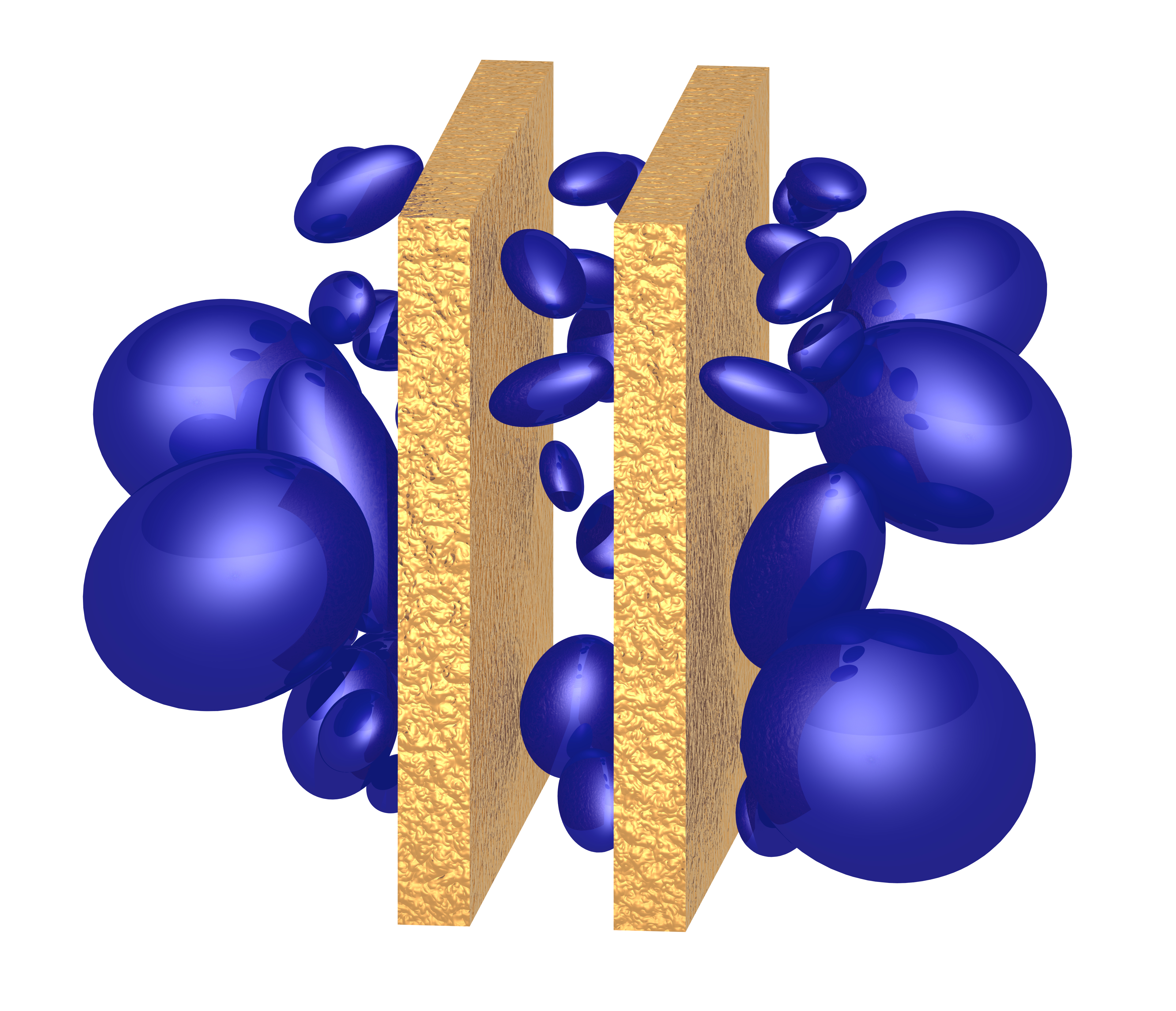
If you tune two parallel gold-coated mirrors to a specific infrared wavelength and inject a solution of organic molecules between them, the chemical reaction rates inside the cell change. You do not turn on a laser. You do not shine a lamp. The chamber remains pitch black.
Yet, without a single photon absorbing into the system, chemical bonds break at altered rates, and reaction pathways tilt toward different products.
This phenomenon, demonstrated in 2019 by a team led by Thomas Ebbesen at the University of Strasbourg, sits uncomfortably alongside standard chemical kinetics. Textbooks teach that to change a reaction’s energy barrier, you alter temperature, swap solvents, or add a chemical catalyst. In Ebbesen’s experiment, none of those changed. Instead, the physical boundary conditions of empty space itself altered the molecular energy landscape.
The Fabry-Pérot Cavity
The experimental setup is surprisingly straightforward. It relies on a microfluidic Fabry-Pérot cavity: two parallel, partially reflecting mirrors separated by a gap of just a few micrometers.
When light is trapped between two mirrors, only specific wavelengths form standing electromagnetic waves. What is easy to forget is that even when a cavity contains no real photons, the vacuum state itself is not empty. Quantum electrodynamics dictates that electromagnetic zero-point fluctuations—vacuum field oscillations—persist in space.
When the spacing between the mirrors is adjusted so that a cavity mode matches the exact vibrational frequency of a specific molecular bond, something unusual happens. The molecular vibration couples strongly to the vacuum electromagnetic field.
The system enters the regime of vibrational strong coupling (VSC). At this point, the molecule and the vacuum field can no longer be described as separate entities. They hybridize, forming new quantum eigenstates called vibro-polaritons. The energy level of the original molecular vibration splits into two distinct polaritonic states: a lower polariton ($VP^-$) and an upper polariton ($VP^+$), separated by an energy gap known as the Rabi splitting.
Measured.
Tilting the Reactant’s Landscape
In their 2019 study published in Science, Ebbesen, Joseph Moran, and their colleagues examined a organic molecule containing two competing reaction sites: a silicon-carbon ($\text{Si-C}$) bond and a silicon-oxygen ($\text{Si-O}$) bond. Under normal laboratory conditions, chemical deprotection cleaves both sites in known proportions.
The team placed the reactant solution inside the microfluidic cavity in total darkness and adjusted the mirror spacing.
When the cavity mode was tuned to be off-resonance with the molecular vibrations, the chemical reaction proceeded at its ordinary rate and product ratio. But when the mirror gap was precisely tuned to resonate with the stretching frequency of the $\text{Si-C}$ bond, the reaction rate slowed down drastically. By contrast, tuning the cavity to other vibrational modes shifted the branching ratio, favoring the cleavage of one bond over the other.
No photons were absorbed or emitted during the process. Gas chromatography-mass spectrometry confirmed that the cavity altered the product yields simply by existing around the liquid.
By measuring the temperature dependence of the reaction, the researchers calculated the thermodynamic parameters of the transition state. The data revealed substantial changes in both activation enthalpy and activation entropy under vibrational strong coupling. The cavity’s vacuum field had reshaped the potential energy surface, raising the activation barrier for specific bond-cleavage pathways.
The Mystery of Collective Coupling
The physics of polaritonic chemistry presents an intriguing puzzle that theoretical physical chemists are still actively working to fully solve.
The coupling strength between a single molecule’s dipole moment and the vacuum field of a microfluidic cavity is relatively tiny. To achieve a measurable Rabi splitting, millions of molecules inside the cavity volume must couple collectively to the same optical mode.
This collective interaction forms two hybridized polaritonic states shared across the entire ensemble. However, it also leaves behind vast numbers of “dark states”—vibrational modes that retain their original energy and do not explicitly hybridize with the photon field.
According to conventional transition state theory, chemical reactions should predominantly proceed through these abundant dark states, effectively washing out any cavity-induced macroscopic rate change. Yet, in the laboratory, Ebbesen’s team observed rate changes by factors of up to 5.5.
How collective coupling alters local chemical bond dynamics without photon absorption remains one of the most active investigations in modern chemical physics. Proposed mechanisms explore localized symmetry breaking, cavity-modified energy redistribution among vibrational modes, and phase correlations induced by the confined vacuum field.
What is already verified, however, is the physical reality of the effect. By simply constraining the boundary conditions of the electromagnetic vacuum, chemistry can be controlled in the dark.
This article is AI-generated (synthetic) content, produced by an automated editorial system with human direction and review. Every claim is traced to published, peer-reviewed sources.