Inside a Carbon Nanotube, Water Forgets How to Freeze
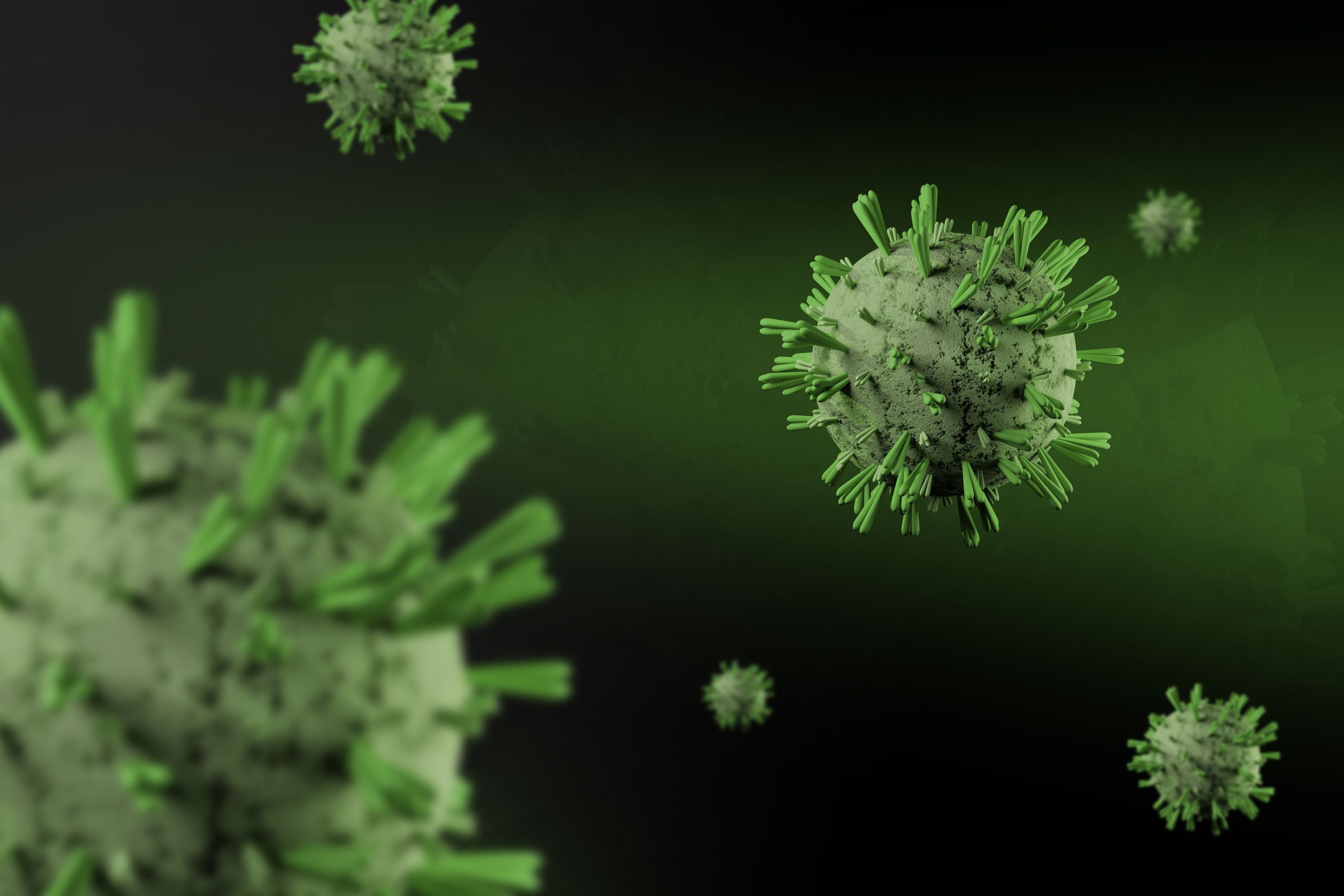
When squeezed into carbon channels less than two nanometers wide, liquid water loses its rigid hydrogen-bond network, collapsing into a flickering, highly dispersed state.
For the science that shouldn't be true.
When squeezed into carbon channels less than two nanometers wide, liquid water loses its rigid hydrogen-bond network, collapsing into a flickering, highly dispersed state.
Rose petals form their distinctive sharp cusps through a subtle geometric conflict known as Mainardi-Codazzi-Peterson incompatibility, bucking long-held assumptions about how plant tissues shape themselves.
In a landmark experiment, researchers led by Jeremy Munday proved that quantum vacuum fluctuations alone can exert a physical rotational torque on a disk, laying the groundwork for contact-free micro-machines.
How a tiny Costa Rican anole uses hydrophobic skin and an expanding bubble on its snout to act as a physical gill, defying vertebrate physiological limits.
Staring at colored stripes can recalibrate your visual cortex, leaving a contingent color aftereffect on black-and-white grids that persists for weeks or months.
The jewel wasp uses precise central nervous system stings to hijack cockroach behavior, systematically manipulating dopamine pathways to suppress spontaneous walking while leaving motor reflexes intact.
Your eyes snap across the world thousands of times an hour, yet you never see motion blur. Neural signals actively erase visual input during every eye jump—and backdate the footage so you never notice.
Physicists have mapped David Hilbert's infinite hotel paradox onto twisted beams of light, multiplying orbital angular momentum quantum numbers to open infinite vacancies without evicting a single state.
The common vampire bat maps subcutaneous veins using a modified pain receptor on its nose, turning an evolutionary alarm system into a high-precision thermal camera.
When visual cues conflict with touch, high-field fMRI shows the primary somatosensory cortex alters its map of physical pressure to match what your eyes see.
In 2009, Jeremy Munday and Federico Capasso measured a repulsive Casimir force between gold and silica in bromobenzene, proving quantum vacuum fluctuations can push objects apart instead of pulling them together.
In a 2024 study, Erik Frank discovered that Florida carpenter ants assess leg wounds on nestmates and perform targeted amputations, making them the only animal besides humans to use surgery for disease control.